Chironoïs
2025 - in progress
Series of bisque-fired ceramics and chamotte stoneware
Variable dimensions
Production Échangeur²², Saint-Laurent-des-Arbres et La Chartreuse - Centre national des écritures du spectacle, Villeneuve-lez-Avignon, France
The Chironoïs series unfolds a collection of ceramics in the form of enigmatic figurines, shaped to the scale of a hand. Their name, derived from the Greek cheir (hand) and a root evoking thought, defines them as ‘hand-thoughts’: forms that are both mental and embodied, emerging from the material like buried memories.
These asexual beings have a distinctive morphology: hands take the place of both the head and the feet, blurring the usual boundaries of the body. Modelled in the palm of the hand and then mass-produced, they retain, in their scale and texture, the memory of the gesture that brought them into being. Their surface, both rough and restrained, suggests a tangible presence, almost ready for touch.
They follow in the tradition of medieval imaginary creatures, such as the blemmys (headless beings with faces on their chests) or the sciapods (one-legged beings with a giant foot serving as a parasol), originating from so-called ‘marvellous’ or ‘marginal’ peoples believed to inhabit the far reaches of the known world. Populating the margins of manuscripts, these figures embodied otherness, the displacement of the senses and bodily reference points, but also the hints of the supernatural that fuelled the collective imagination.
The Chironoïs seem to be animate by a latent life. Their silhouettes encapsulate a tension between multiplicity and singularity: although mass-produced, each one appears to bear a subtle variation, as if they were so many manifestations of a single, diffuse entity. They thus appear as a silent community, whose relationships – whether hierarchical, genealogical or symbolic – remain open.
Straddling the line between fragile presence and the power of designation, the Chironoïs establish a direct relationship with the viewer. Through their oriented, sometimes indicative forms, they seem to point, reveal, or even direct attention. As liminal figures, they occupy an intermediate space between object and sign, between body and thought.
© Adagp, Paris
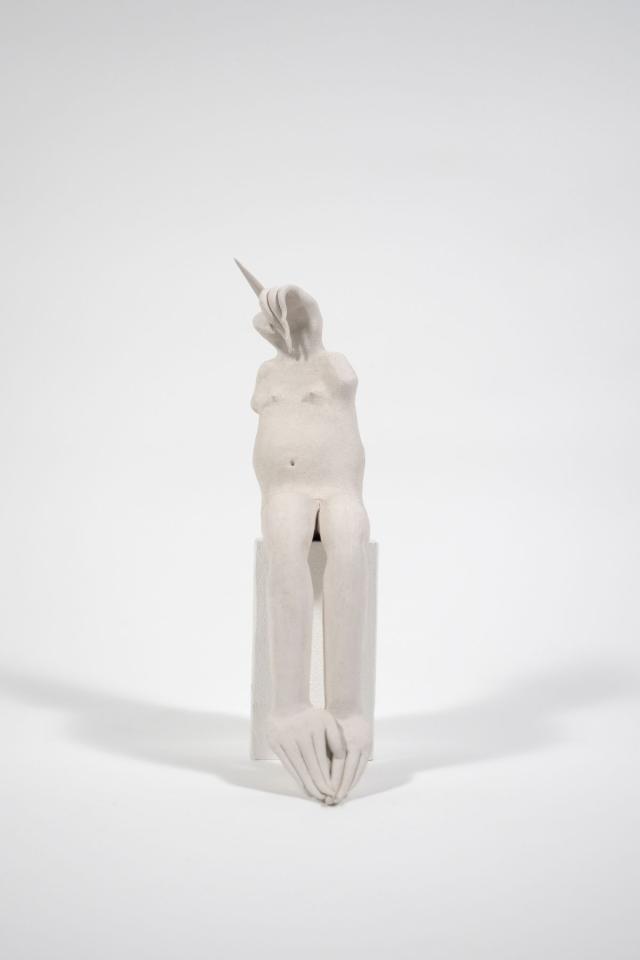
Chironoïs (The Child), 2025 - in progress, biscuit-fired ceramic and chamotte stoneware
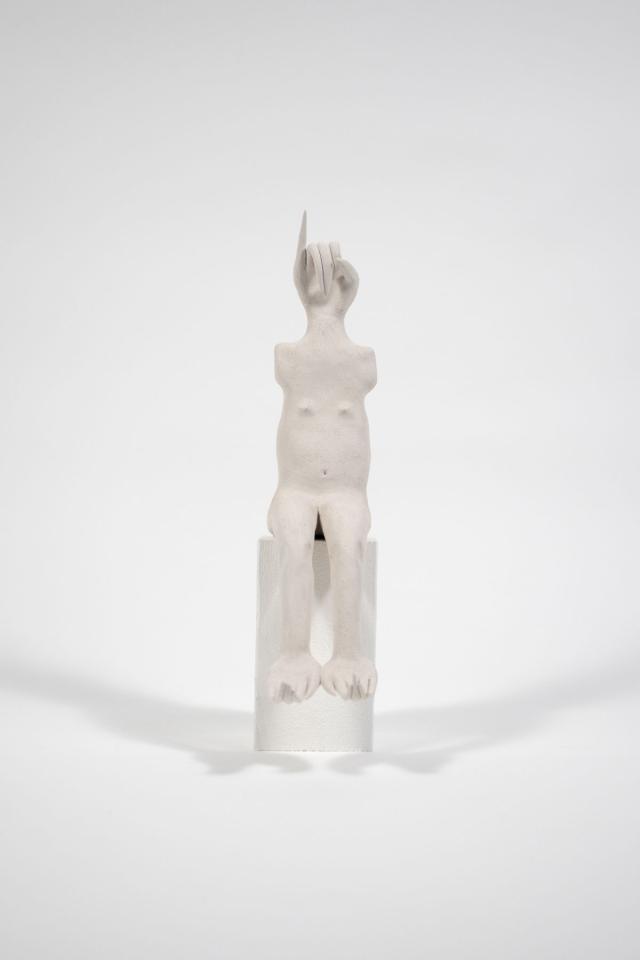
Chironoïs (The Curious), 2025 - in progress, biscuit-fired ceramic and chamotte stoneware
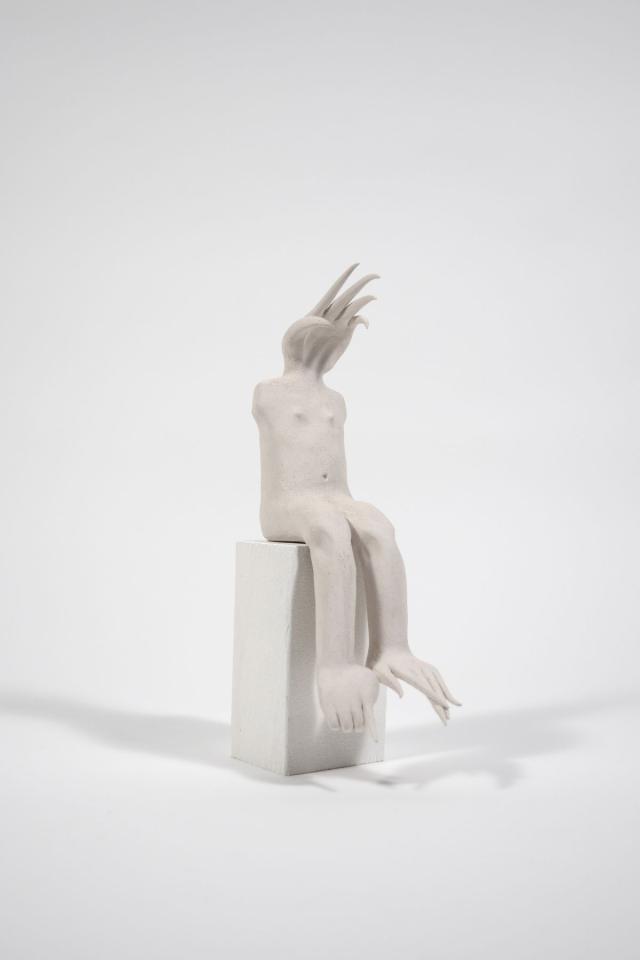
Chironoïs (The Hesitant), 2025 - in progress, biscuit-fired ceramic and chamotte stoneware
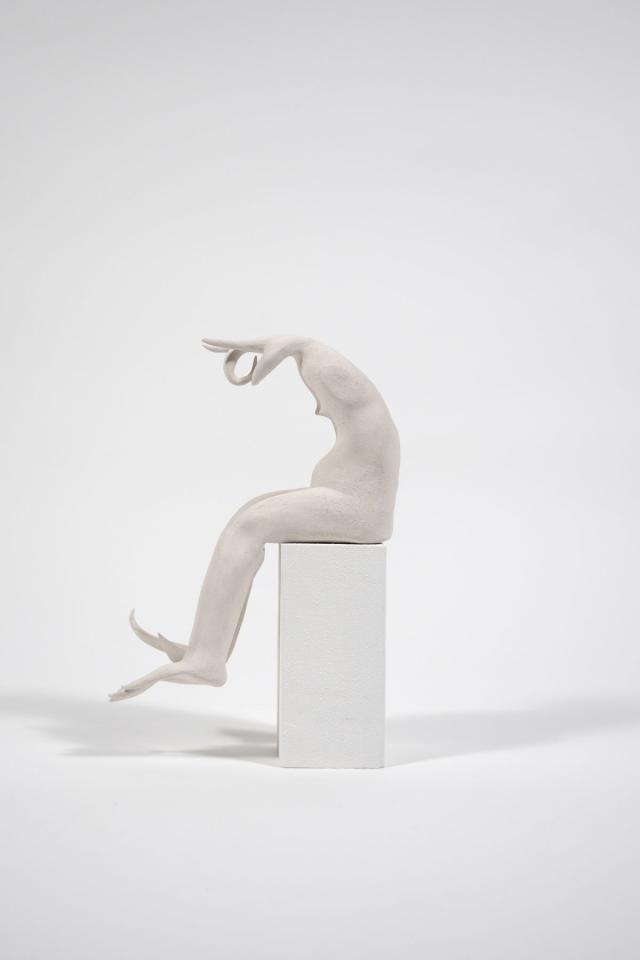
Chironoïs (The Horned), 2025 - in progress, biscuit-fired ceramic and chamotte stoneware
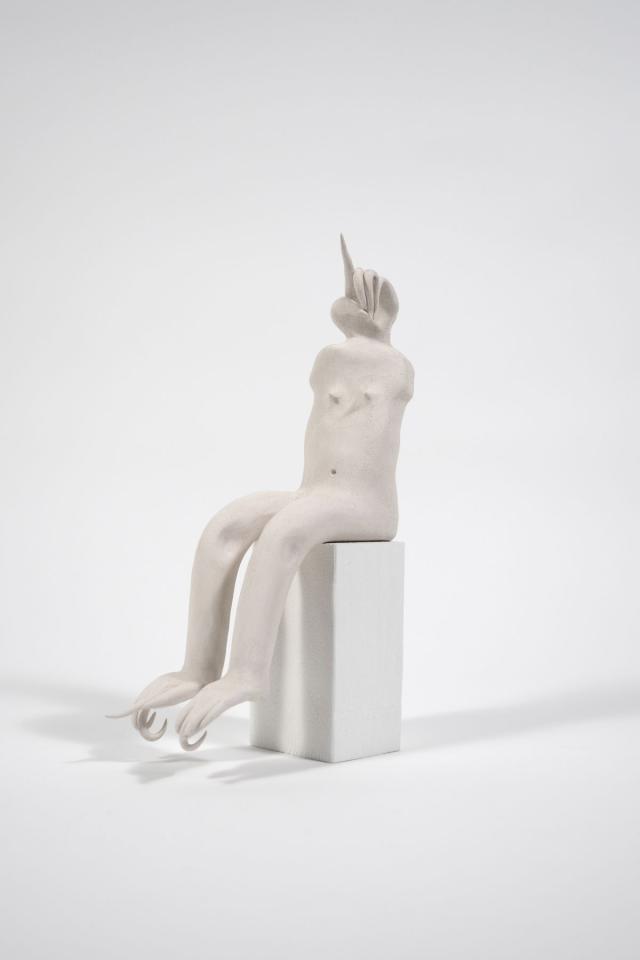
Chironoïs (The power), 2025 - in progress, biscuit-fired ceramic and chamotte stoneware
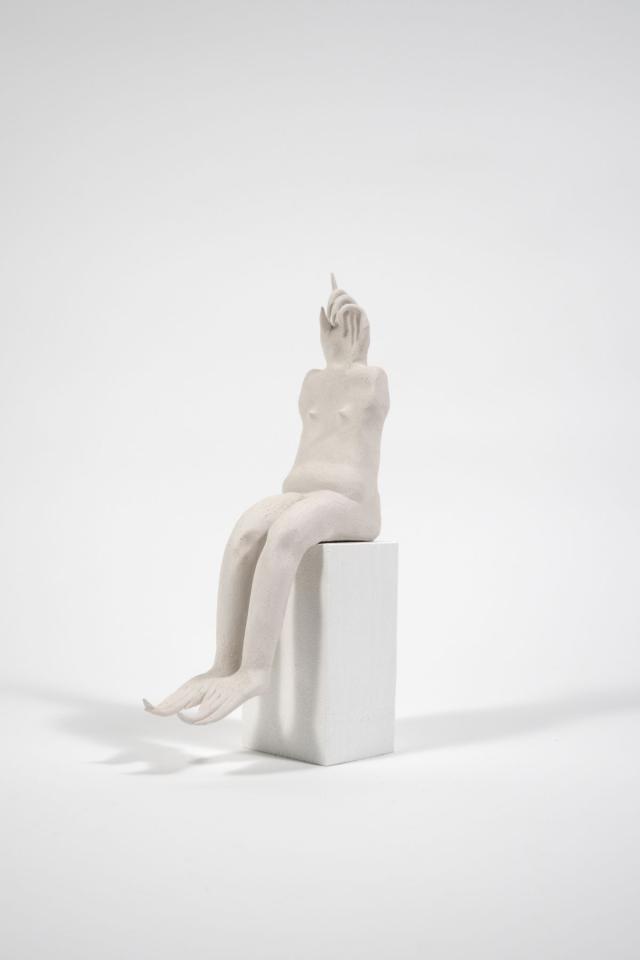
Chironoïs (The Receiver), 2025 - in progress, biscuit-fired ceramic and chamotte stoneware

Chironoïs, 2025 - in progress, series of biscuit-fired ceramic and chamotte stoneware, view of the group show SILENCE, 2025, La Chartreuse - Centre national des écritures du spectacle, Villeneuve-lez-Avignon, France

Chironoïs, 2025 - in progress, series of biscuit-fired ceramic and chamotte stoneware, view of the group show SILENCE, 2025, La Chartreuse - Centre national des écritures du spectacle, Villeneuve-lez-Avignon, France

Chironoïs, 2025 - in progress, series of biscuit-fired ceramic and chamotte stoneware, view of the group show SILENCE, 2025, La Chartreuse - Centre national des écritures du spectacle, Villeneuve-lez-Avignon, France